
Articles
Here we give you our best answers to your questions about OEE, improvement work, and how to succeed in increasing productivity in your factory.
OEE
How do you use OEE for capacity planning?
OEE helps you link customer demand to the required production time. With accurate cycle times and a realistic OEE value, you can calculate potential volume, compare capacity options, and identify which losses need to be reduced.
Read more ›
OEE
What should an OEE policy contain?
An OEE policy documents how the plant defines production time, cycle times, stoppages, and quality. Standardised rules make it easier to trust tracking, understand losses, and compare performance over time.
Read more ›
Lean production
How do you build a production loss matrix?
A loss matrix links production losses to the functions capable of resolving them. By combining loss type, cause, and ownership, it becomes easier to prioritise actions and track them from analysis through to verified results.
Read more ›
OEE
How do you ensure data quality in an OEE system?
Reliable OEE data requires the correct schedule, cycle times, machine signals, production counts, and downtime causes. With a clear control routine, the factory can identify deficiencies before they affect capacity planning and improvement decisions.
Read more ›
OEE
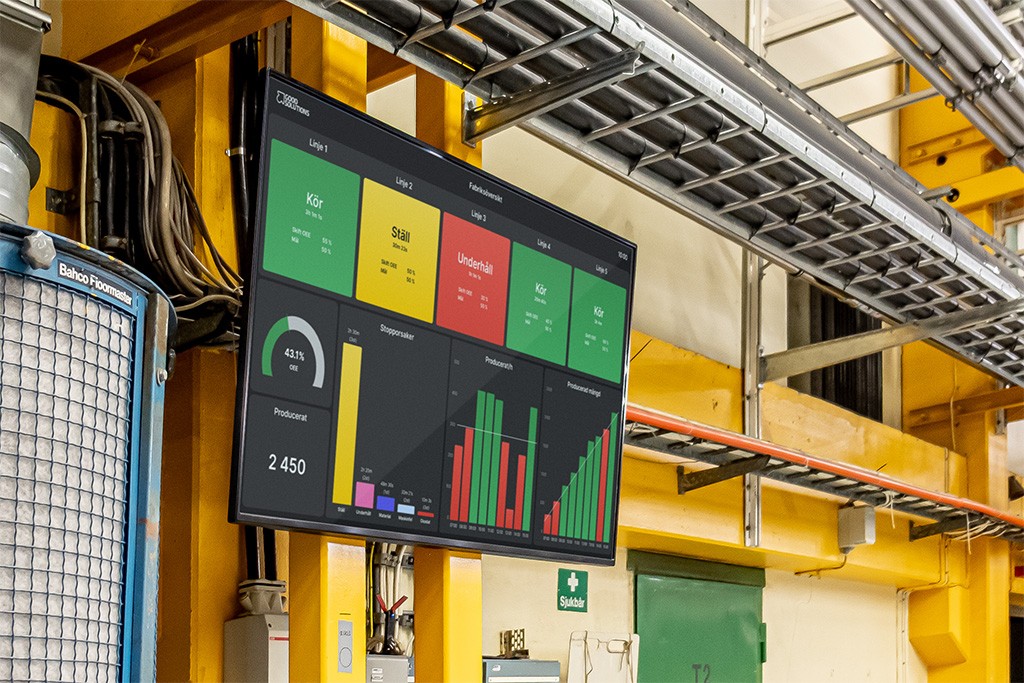
What is the difference between RS Production and Good Solutions' web platform?
The difference in short: From measuring to improving. From OEE systems to tools for continuous production improvements. RS Production is a proven platform used by thousands of users in hundreds of factories. Good Solutions' web platform is a Manufacturing Improvement Platform (MIP). It is a broader tool for the factory's daily management and improvement work, with a powerful OEE system as part of the whole.
Read more ›

Lean production
What is loss analysis and how do you use it in production?
Loss analysis involves breaking down production losses by cause, line, article, shift, and time, so that the factory knows exactly where capacity and money are being lost. The analysis is what makes an OEE figure useful: the figure shows that losses exist, while the analysis shows where, when, and why. It is the loss analysis that allows improvement efforts to be targeted at the most costly losses first, rather than those that are simply the most visible.
Read more ›

Lean production
How do you work with continuous improvements in production?
Continuous improvement means that the factory systematically and continuously identifies losses, addresses root causes, and ensures that the improvements are sustained, in small steps that never end. The work is driven in a recurring improvement cycle: measure, analyse, prioritise, act, and follow up. The OEE system is one of the tools needed in the work on continuous improvement. The OEE system provides factual basis for the improvement cycle, as it shows where the losses are, how large they are, and whether the measures have had an effect.
Read more ›

Lean production
What is daily management and how does it work in production?
Daily management is a structured way of working where the production team meets daily, often for a short stand-up meeting, to review yesterday's results, today's plan, and any deviations that need to be addressed. The purpose is to detect and resolve problems within hours instead of weeks. With an OEE system as a source of truth, the meeting is based on actual numbers rather than recollections, and deviations become visible the same day they occur.
Read more ›

Lean production
How does the factory get deliveries started after the holidays without stress or unplanned stops?
By treating ramp-down and ramp-up as a planned process with well-defined target states per process, at the machine and function level, and not as a hope, the factory can quickly, in a controlled and predictable manner, return to normal status after the holidays. This requires five principles that the article addresses.
Read more ›
OEE
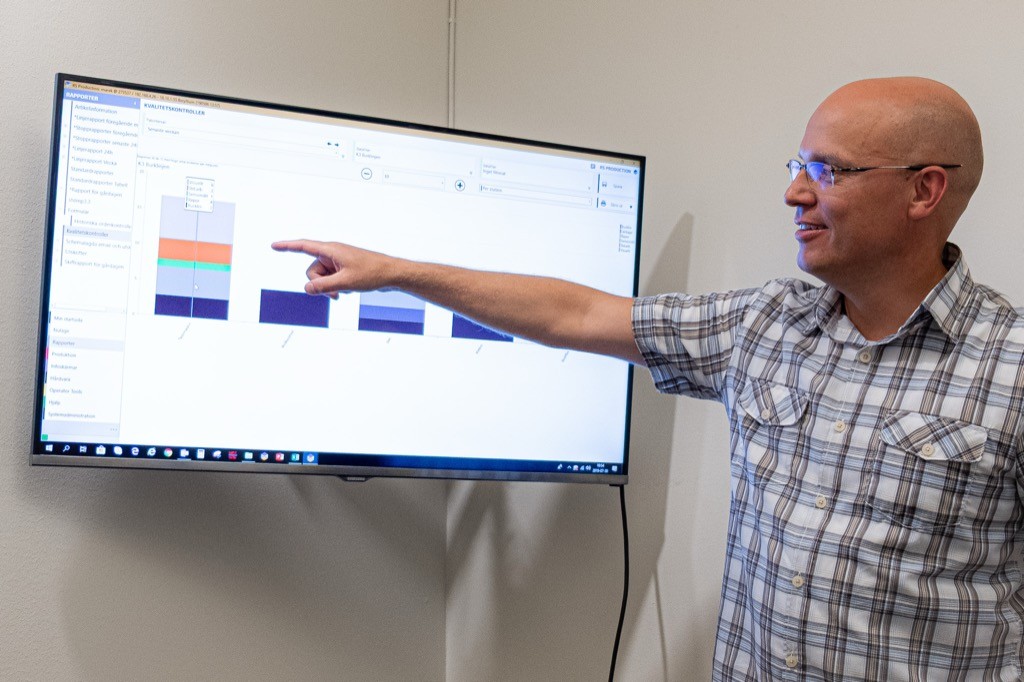
How do you calculate the ROI of an OEE system?
Your ROI comes from five savings: higher output from the same machinery, lower downtime costs, less scrap and rework, shorter changeover times, and lower energy consumption per unit.
Read more ›

OEE
How do you lower energy consumption without new machinery?
Higher OEE can reduce energy consumption per approved unit, but the effect needs to be verified through measurement. Track total kWh, kWh per approved unit, power peaks in kW, and costs individually.
Read more ›
OEE
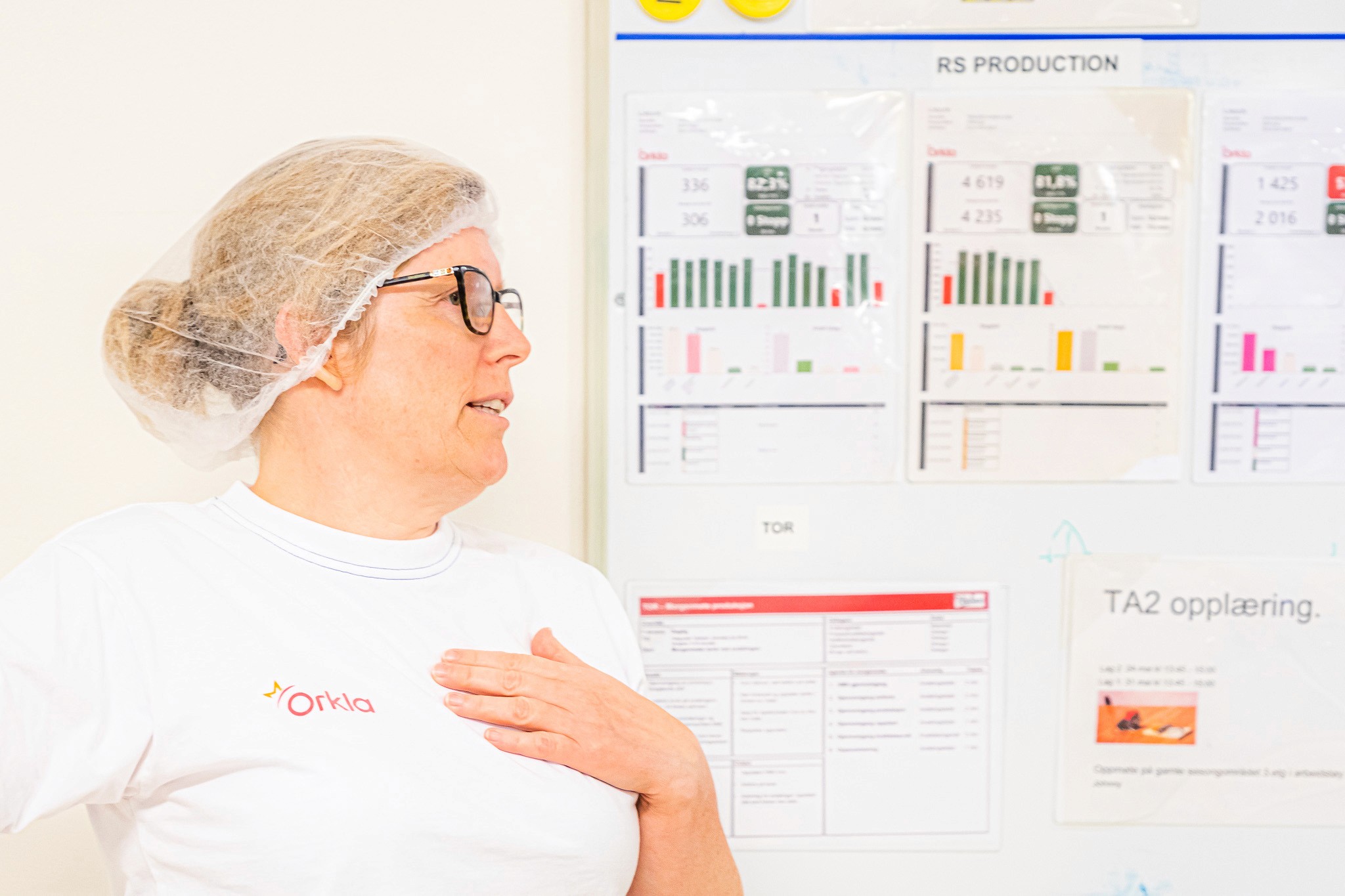
What is OEE and how is it calculated?
OEE consists of three multiplied subcomponents: Availability × Performance × Quality. For example, 85% availability, 98% performance, and 97.5% quality result in an OEE rate of 81%.
Read more ›

OEE
How do you select the right OEE system?
Start with the outcome you want to achieve, not with a feature list. Ensure the system is easy to use, supports daily management, provides reliable data, delivers deep loss analysis and real-time visibility, matches your machine fleet, integrates with other systems, and is scalable.
Read more ›
OEE
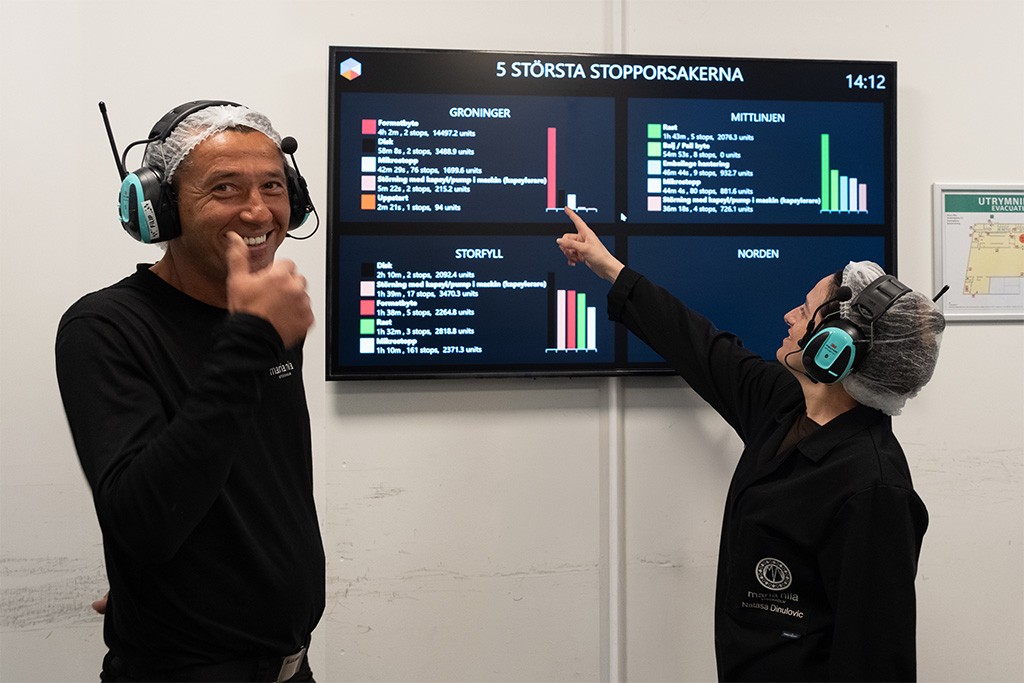
Why is OEE not enough as the sole KPI?
The OEE figure only shows that production is losing efficiency, but not why. The figure says nothing about the causes of the losses. OEE needs to be broken down and used as a basis for improvement work.
Read more ›

OEE
How are setup times reduced in production?
Reduce changeover time by measuring downtime accurately. Use the SMED method to separate and convert internal to external steps, as well as streamlining each individual step. By shifting preparation work to when the machine is running, downtime is minimised.
Read more ›
Take the first step towards increased productivity
Book a demo, and our experts will present a concrete plan to increase productivity, reduce resource use, and achieve profitability and sustainability targets.
Or call us and we will help you
© 2026 Good Solutions Sweden AB